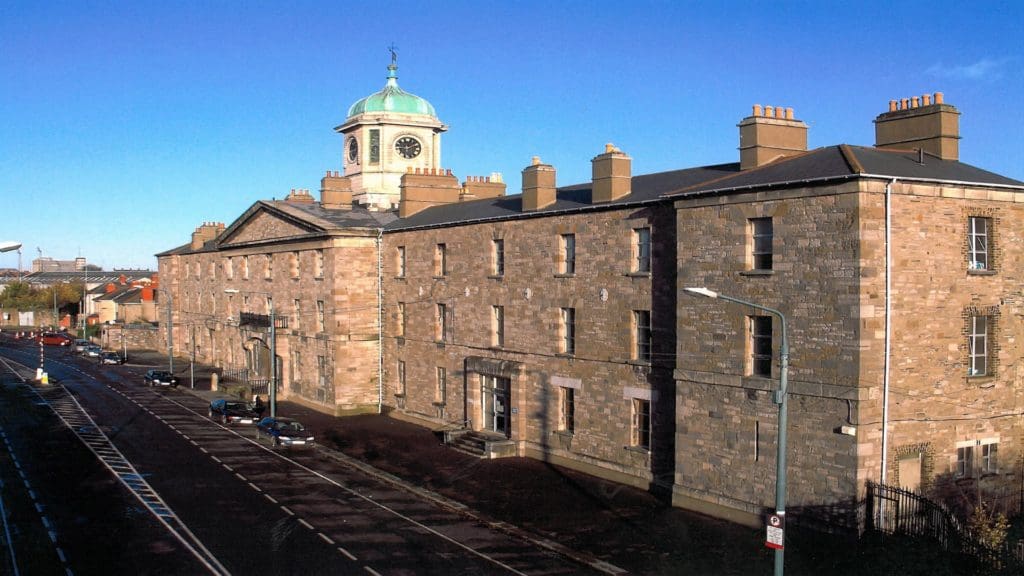

Client: OPW
Kilmainham Gaol and Kilmainham Courthouse were completely refurbished in time for the 1916|2016 centenary celebrations, with DBFL providing civil and structural engineering services.
DBFL provided civil and structural engineering services for conservation and accessibility works at Kilmainham Courthouse and Kilmainham Gaol.
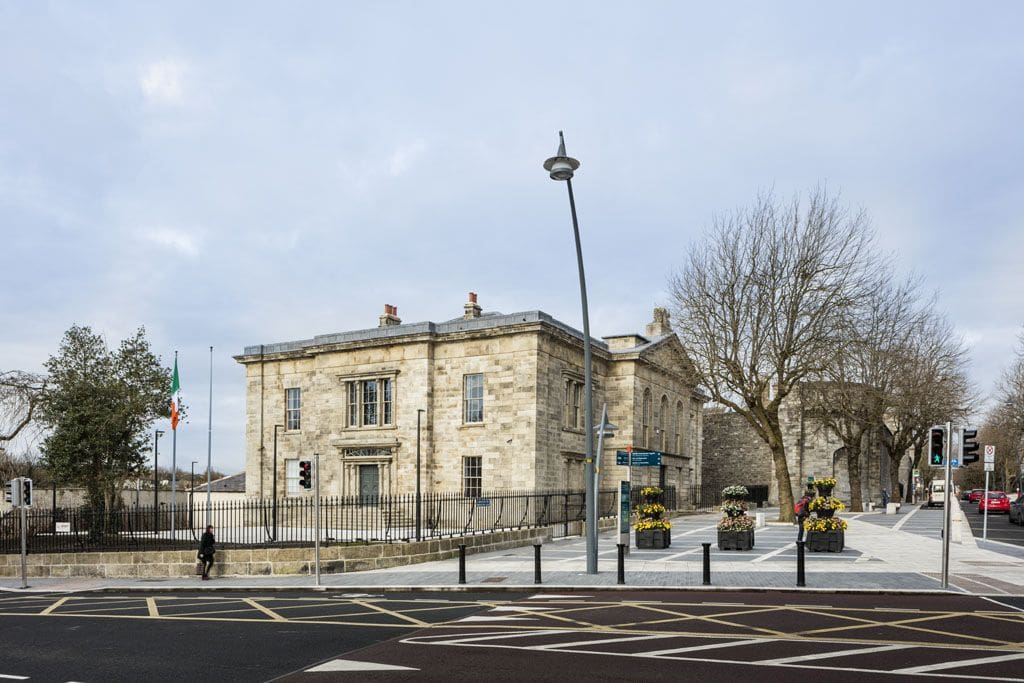
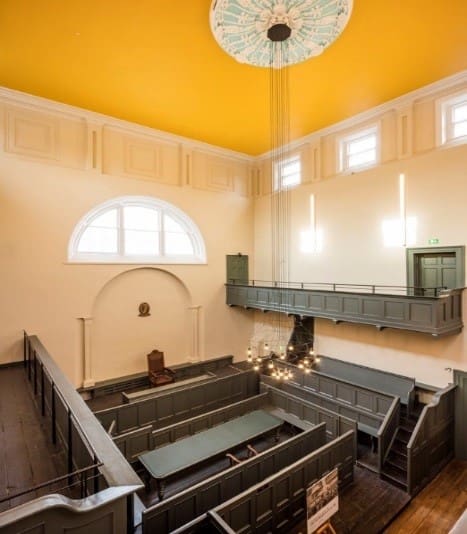
At Kilmainham Courthouse, the works included structural alterations to facilitate the installation of a passenger lift, platform lift and ambulant disabled stairs, together with a new concrete ground floor within part of the courtroom. A new steel access bridge was constructed at first-floor level to connect the West and East Wings, including new openings at either end.
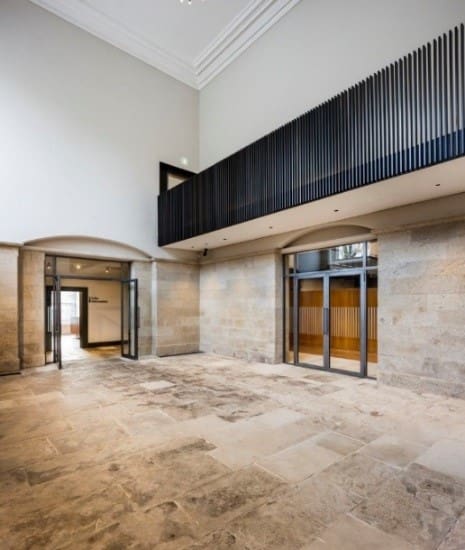
The works also included modifications to existing strengthening measures to the historic stone staircase, followed by load testing, as well as a new rooflight, granite paving and steps. Limecrete floor slabs were installed within the Entrance Hall and outbuilding, with remedial works undertaken to existing metal railings and stone boundary walls along Inchicore Road and the South Circular Road. New foul and surface water drainage was also provided.
At Kilmainham Gaol, the works included new paving, ramps and steps within the Yard, together with a new door opening connecting the Museum building to the Yard. Protective steel fencing was installed adjacent to the East Wing basement, while new foul and surface water drainage within the Yard was connected to the drainage infrastructure at the Courthouse site.
Overall, the works required careful integration of new structural, accessibility and drainage infrastructure within the sensitive historic fabric of the Courthouse and Gaol.
The existing stone staircase had deflected over time and had been previously supported with a grillage of structural steel to prevent collapse. These supports were removed, and damaged steps were replaced with new bespoke hand carved granite steps. Analytical models were developed to determine capacities of the stairs and predict deflections. Static load tests were carried out to verify analytical models and the stairs was proven to have the capacity to meet the increased loading requirements of modern Design Codes.
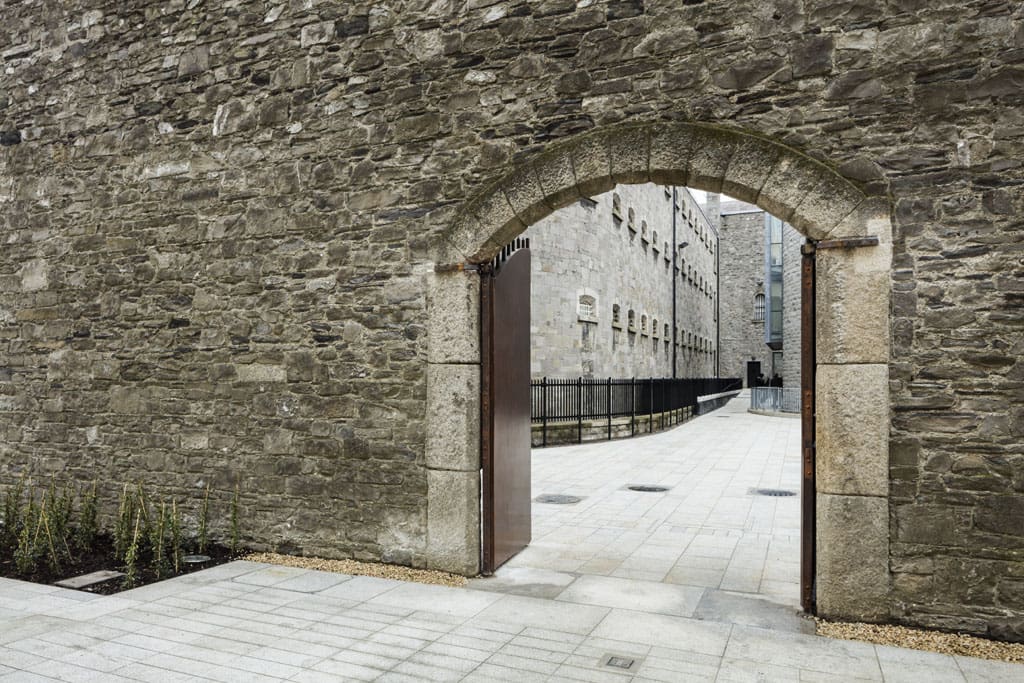
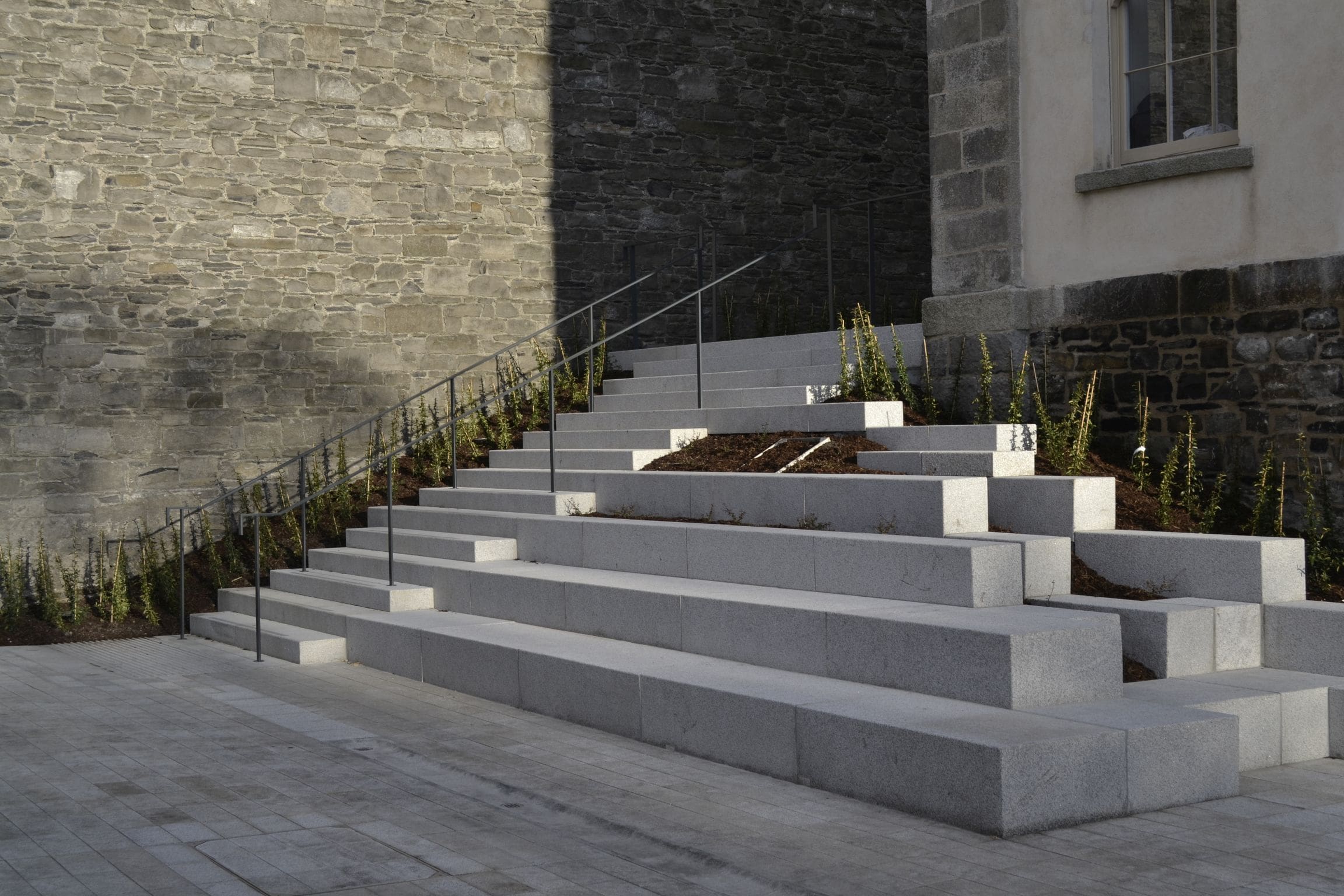
The refurbishment and restoration of Kilmainham Gaol and Courthouse demonstrates the significant sustainability benefits of conserving and adapting historic buildings. By retaining, repairing and reusing the existing structure and original materials—including stonework, lime render, granite flagstones, staircases, fireplaces, walls and ceilings—the project reduced the need for new construction materials and avoided much of the embodied carbon and waste associated with demolition and replacement. Existing elements were carefully restored wherever possible; for example, granite paving was individually recorded, lifted to allow the installation of underfloor heating, and reinstated in its original position. Sensitive repairs using traditional materials and techniques, alongside structural strengthening and accessibility upgrades, have extended the useful life of the buildings while allowing them to meet modern visitor requirements.

Project Director