
Client: Peter McVerry Trust
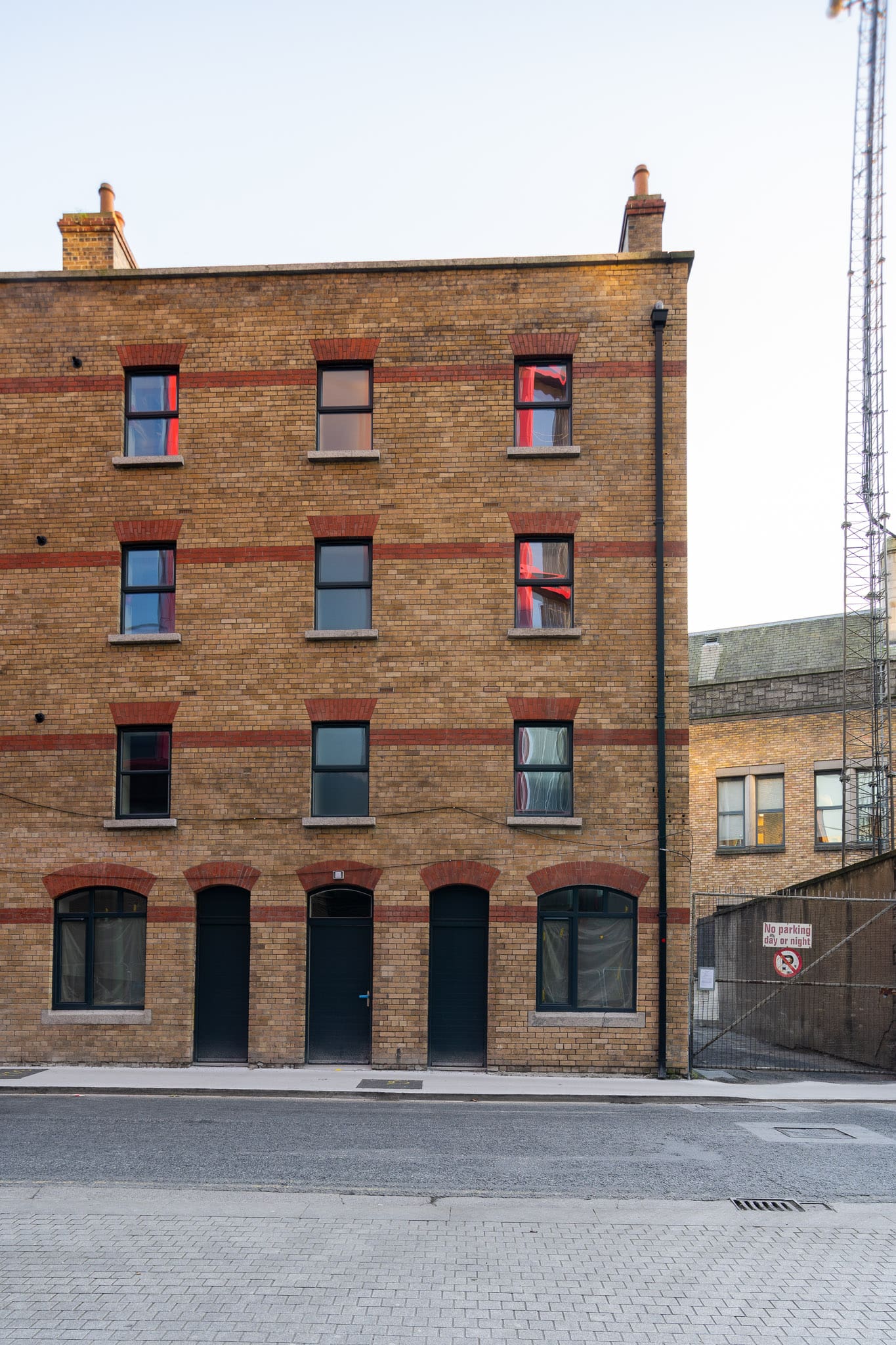
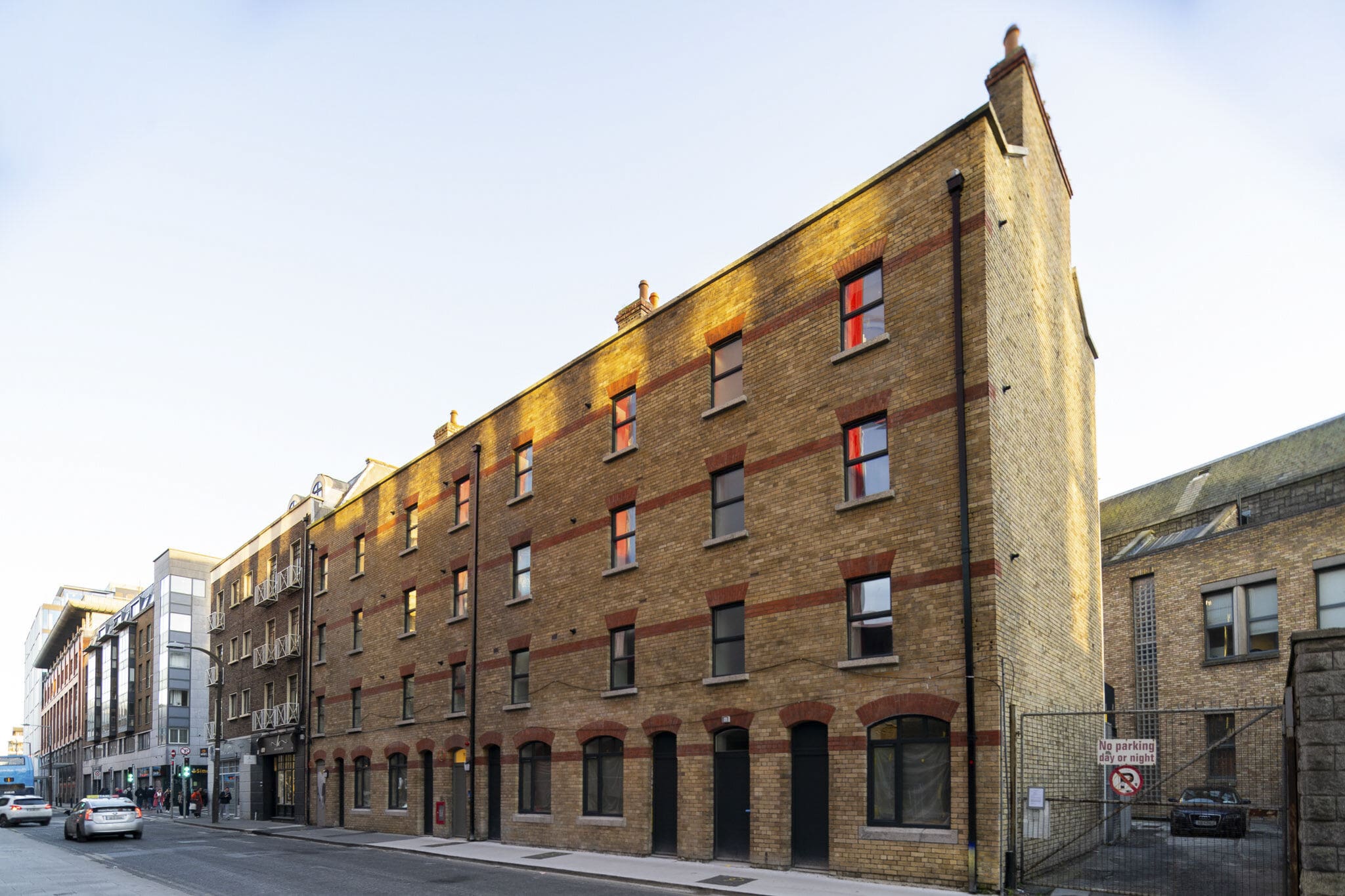
DBFL were appointed to provide full civil and structural engineering services for the refurbishment and renewal of a four-storey historic residential building at 180–187 Townsend Street, Dublin 2. The project delivers 20 one-bedroom social housing units for the Peter McVerry Trust within a long-vacant structure.
The building was originally constructed circa 1909 as one of Dublin Corporation’s first social housing developments. The structure is of traditional masonry construction with clinker concrete filler joist floors incorporating infill steel joists, and a timber roof. The building had remained unoccupied since 2011 and was in a state of significant disrepair prior to works commencing in January 2023.
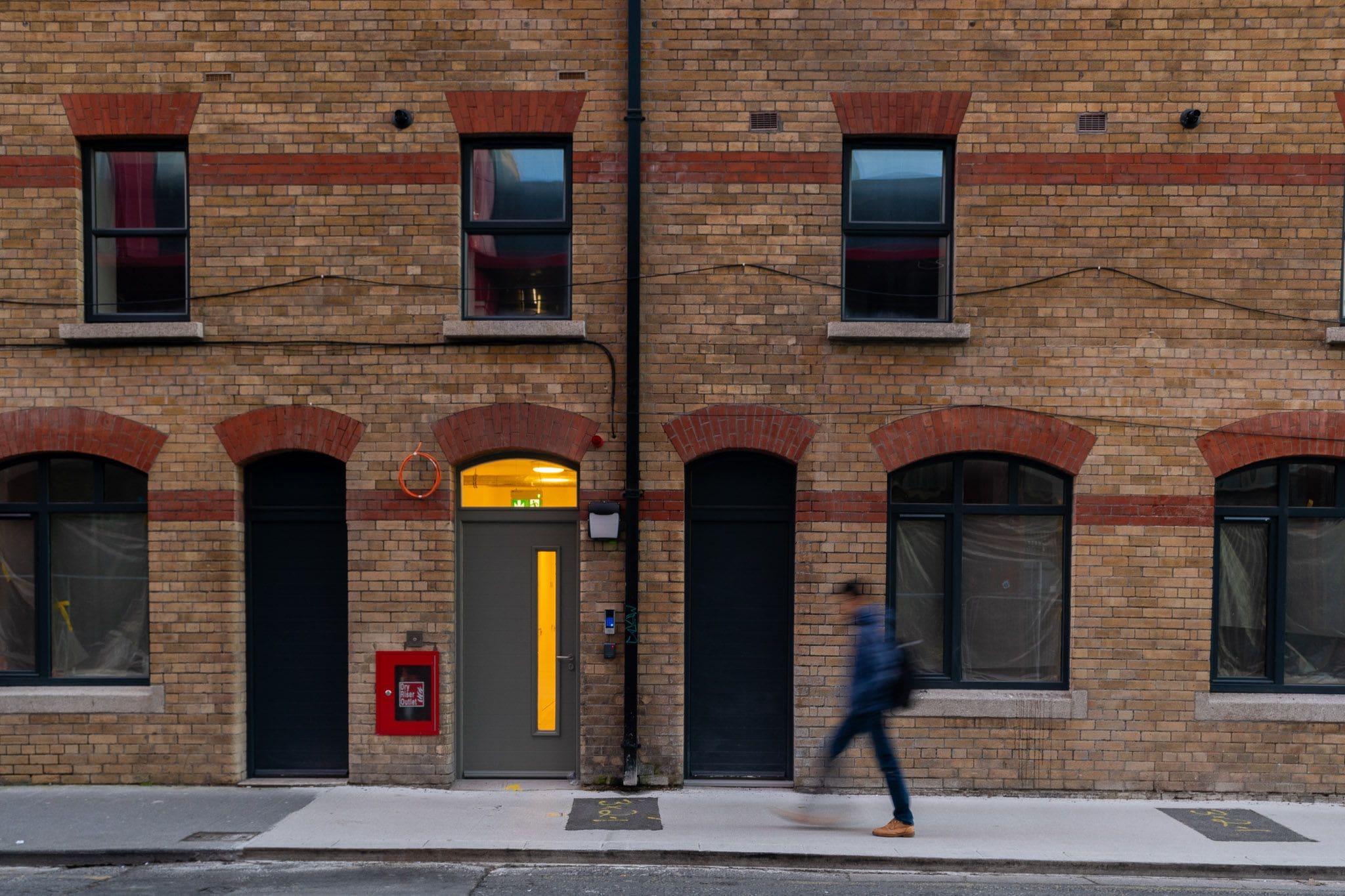
DBFL carried out a full structural condition survey to identify areas requiring repair and intervention. Works included remediation of damaged masonry, replacement of failed lintels, repair and protection of corroded steel joists and targeted replacement of roof timbers. All interventions were designed to be sympathetic to the original building fabric, with minimal intervention and maximum retention of the existing structure adopted throughout.
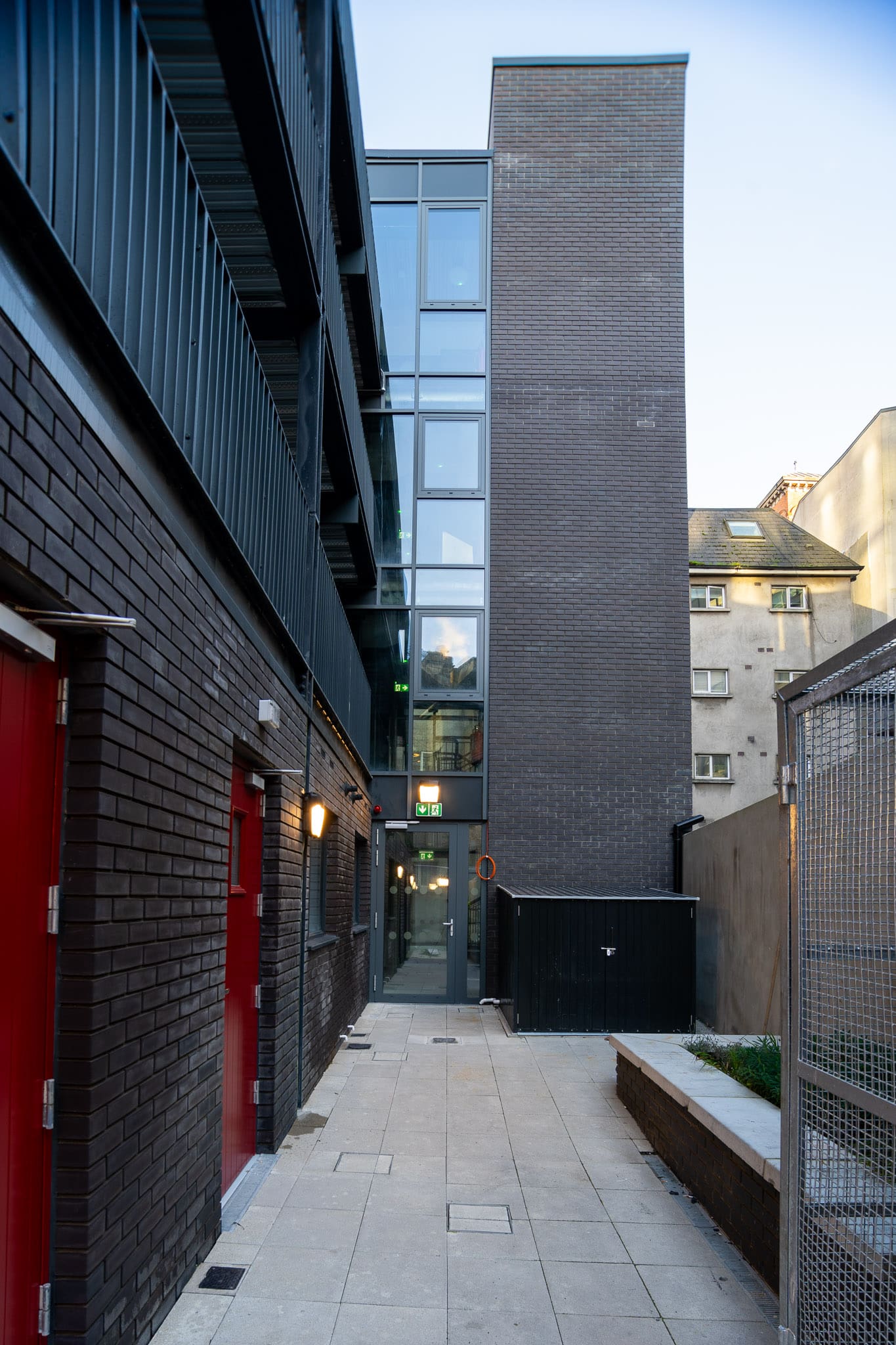
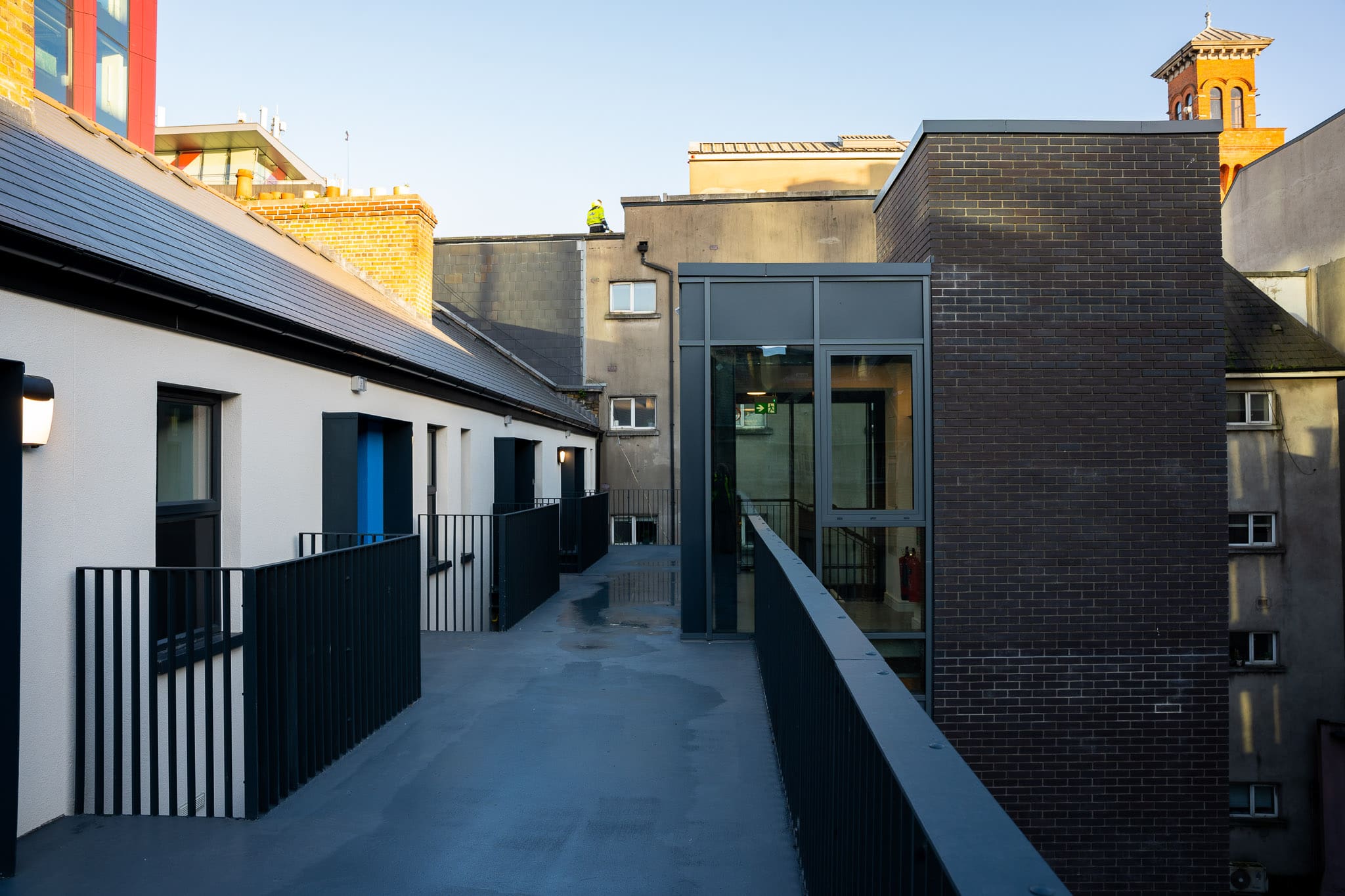
The original internal stairwells were removed and infilled to increase usable floor area and achieve compliant apartment layouts. Access to the upper floors is now provided via a new external steel‑framed walkway constructed over a rear ground‑floor extension, linked by a new reinforced concrete core incorporating a lift and stairwell.
Civil engineering works included the separation of foul and surface water drainage, with surface water attenuated on site within aquacell tanks located in the rear courtyard prior to discharge to the public sewer on Townsend Street.
The project involved extensive refurbishment of a historic structure within a constrained city‑centre site. Ongoing inspections and responsive design adaptations were required as further opening‑up works revealed the extent of deterioration. Detailed assessment of the existing clinker concrete filler joist floors allowed the majority of infill steel joists to be retained through cleaning, protection and localised strengthening, avoiding unnecessary replacement.
Irregular existing floor levels were addressed through the specification of a proprietary lightweight screed system, enabling level correction without overloading the existing structure and eliminating the need for additional strengthening works.
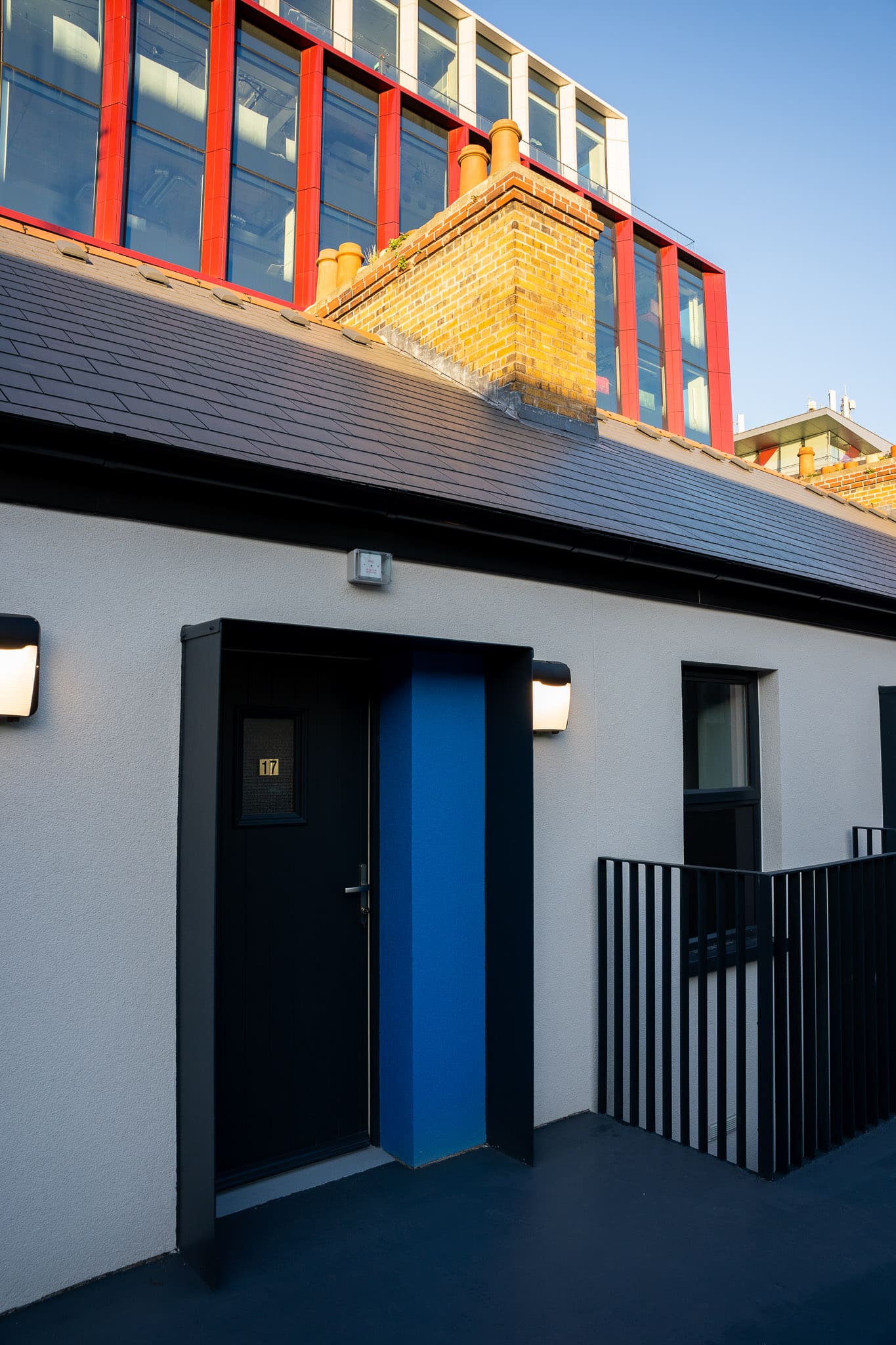
The project demonstrates the sustainable reuse of an existing building to deliver high‑quality housing. Retention of the original structure significantly reduced embodied carbon, while conservation‑led repairs ensured the historic street façade remains virtually unchanged from its original 1909 appearance.
The project won both the 2026 ACEI Sustainability Built Environment Award and the 2026 ACEI Structural Award for small projects, an outstanding achievement for this small but impactful project.

Project Director