
Client: OPW
DBFL are providing full Civil and Structural Engineering consultancy services on this OPW project.
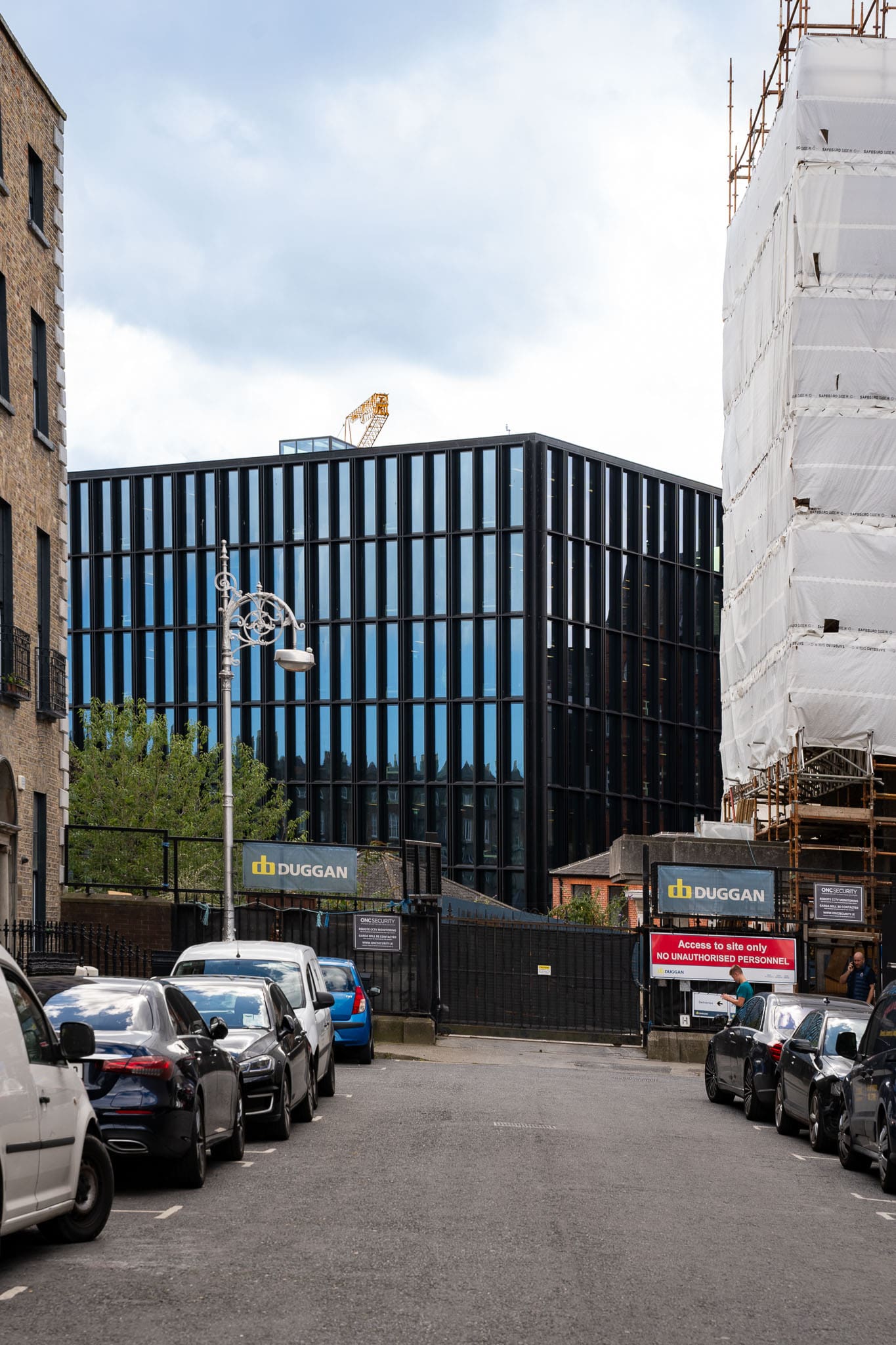
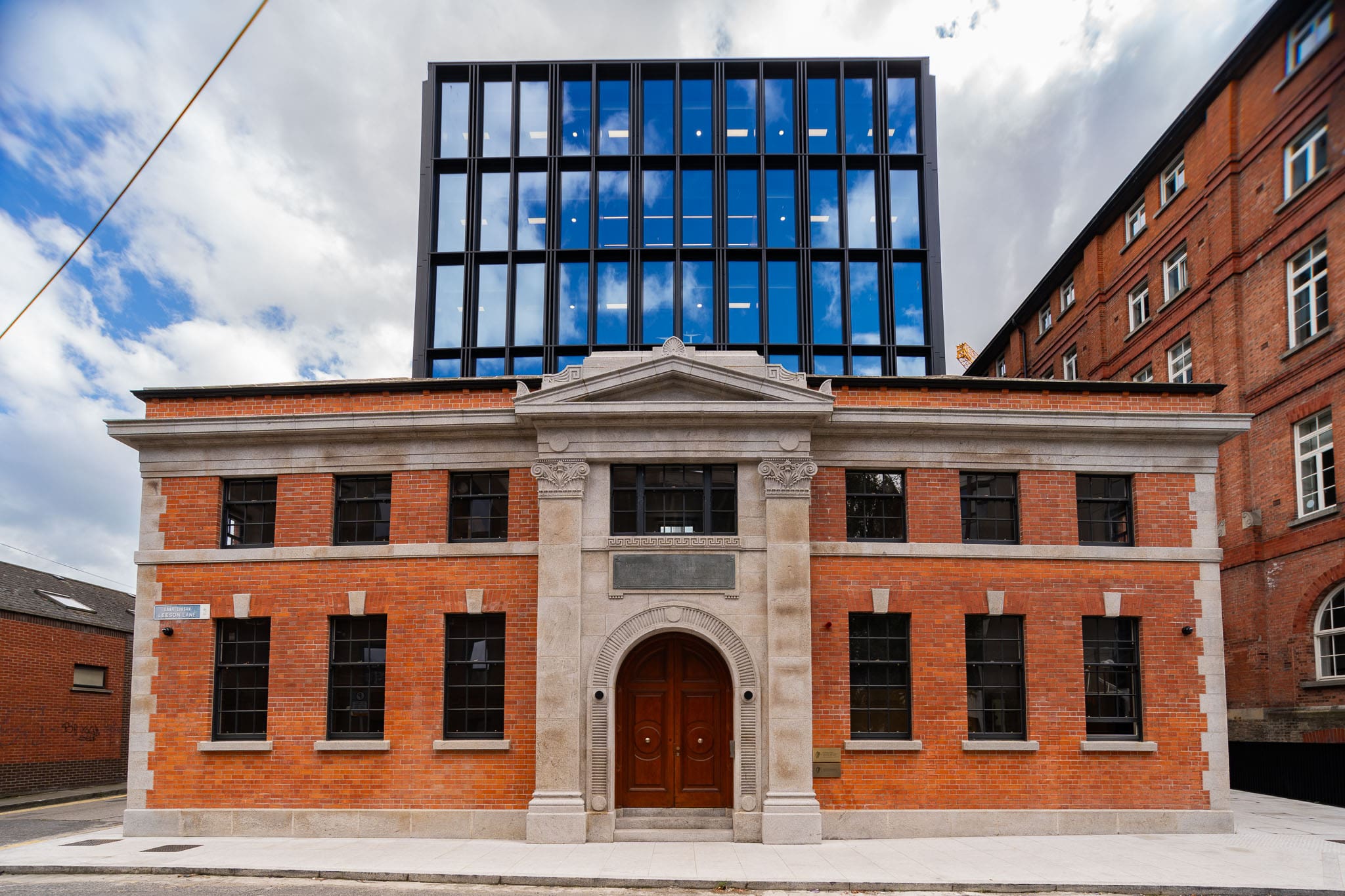
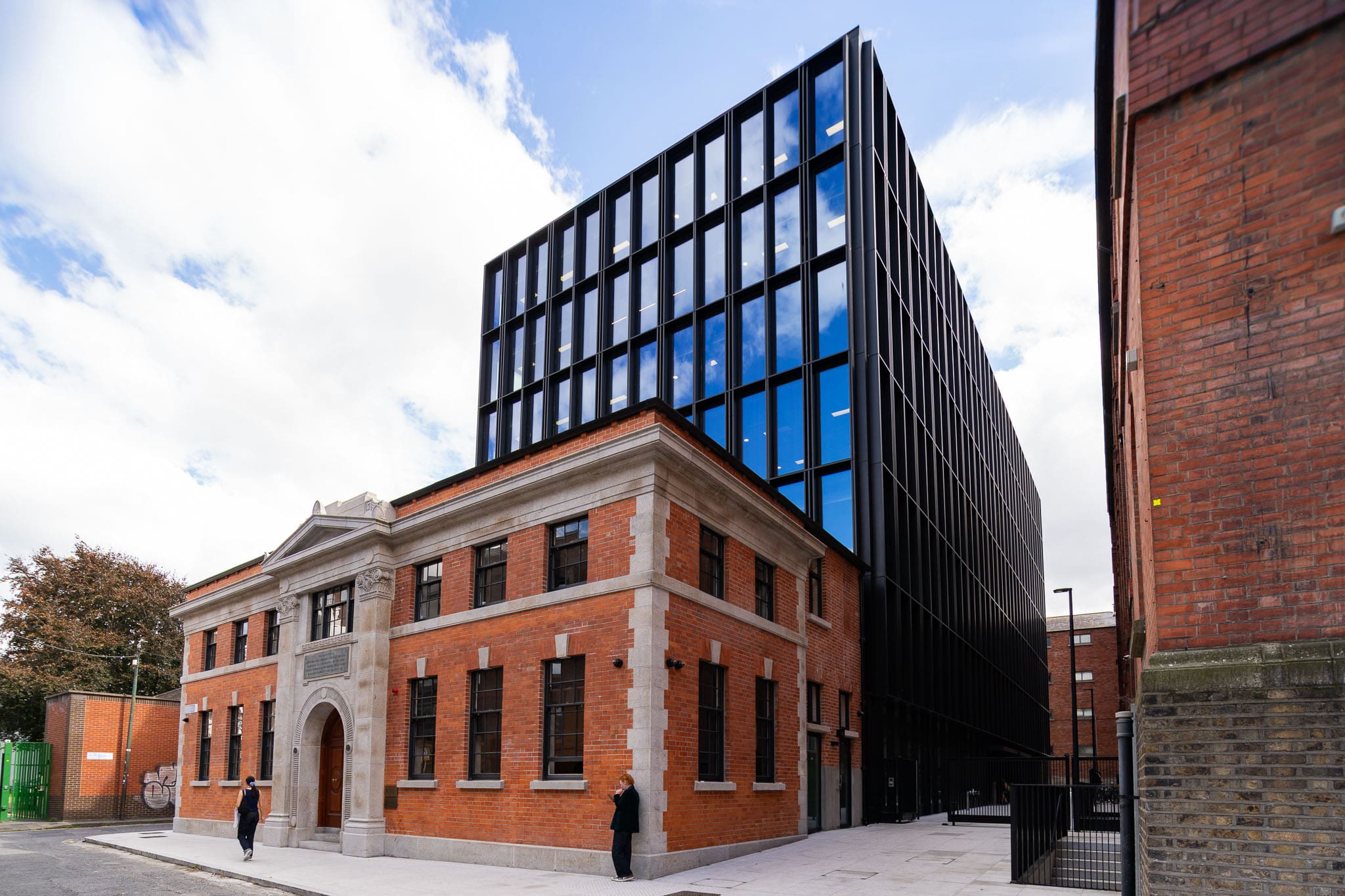
This development is comprised of the restoration and refurbishment of Spruce House, a former dispensary building and the construction of a new 7 storey (over basement) office building linked to the rear of Spruce House at ground and first floor levels. Due to tight site constraints and limited space for storage, set down and loading and also the requirement for thin floor plates and clear open spans the superstructure consists of precast wideslab floors on slimflor steel beams as part of the steel frame which is internally braced at one end and stabilised by an RC core at the other. The basement is constructed using propped embedded secant piled retaining walls up to 1.5 storey’s deep at one end. Site development works include the reinstatement of Leeson Place, a historic laneway and the construction of a new ESB substation.
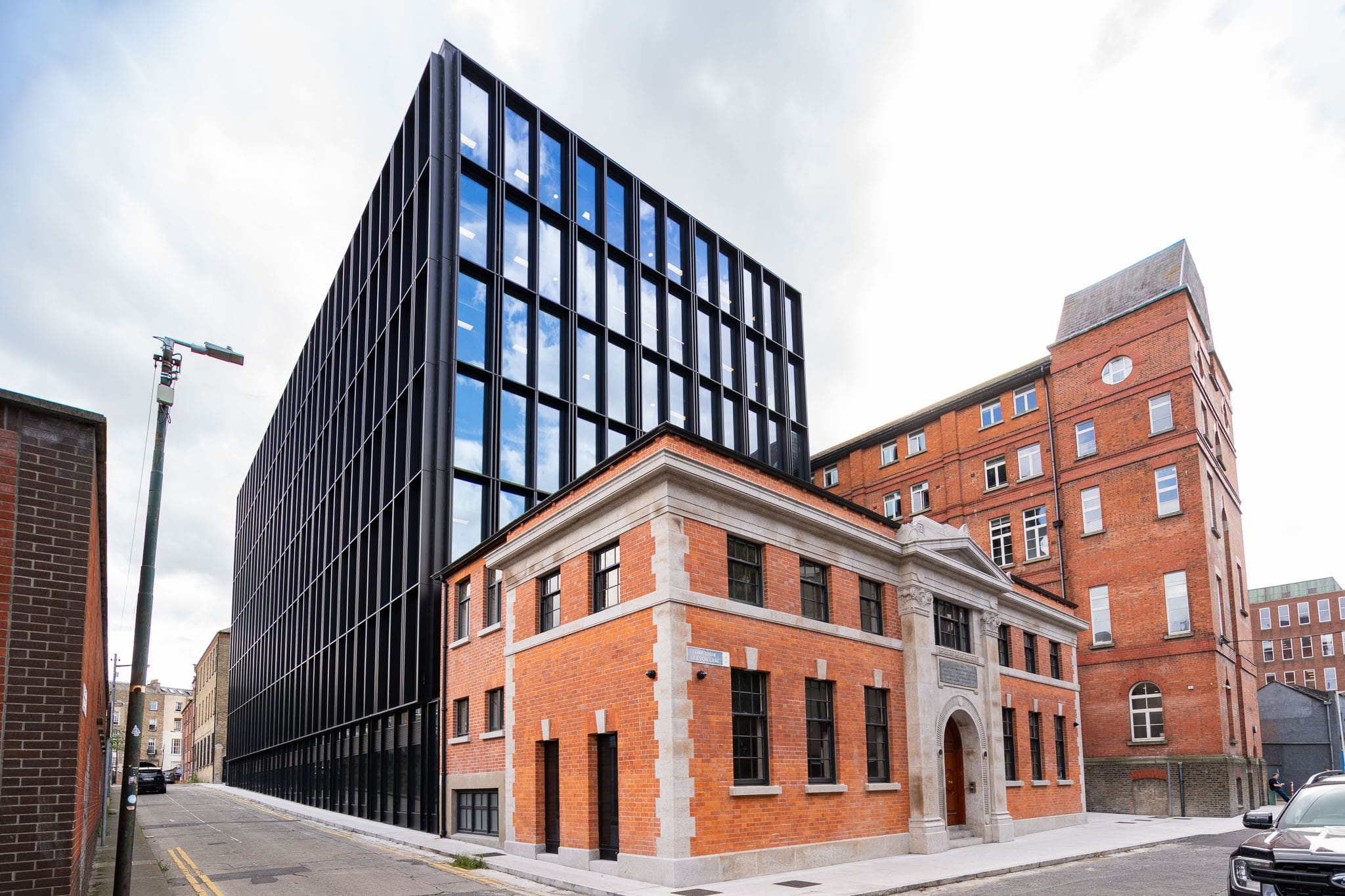
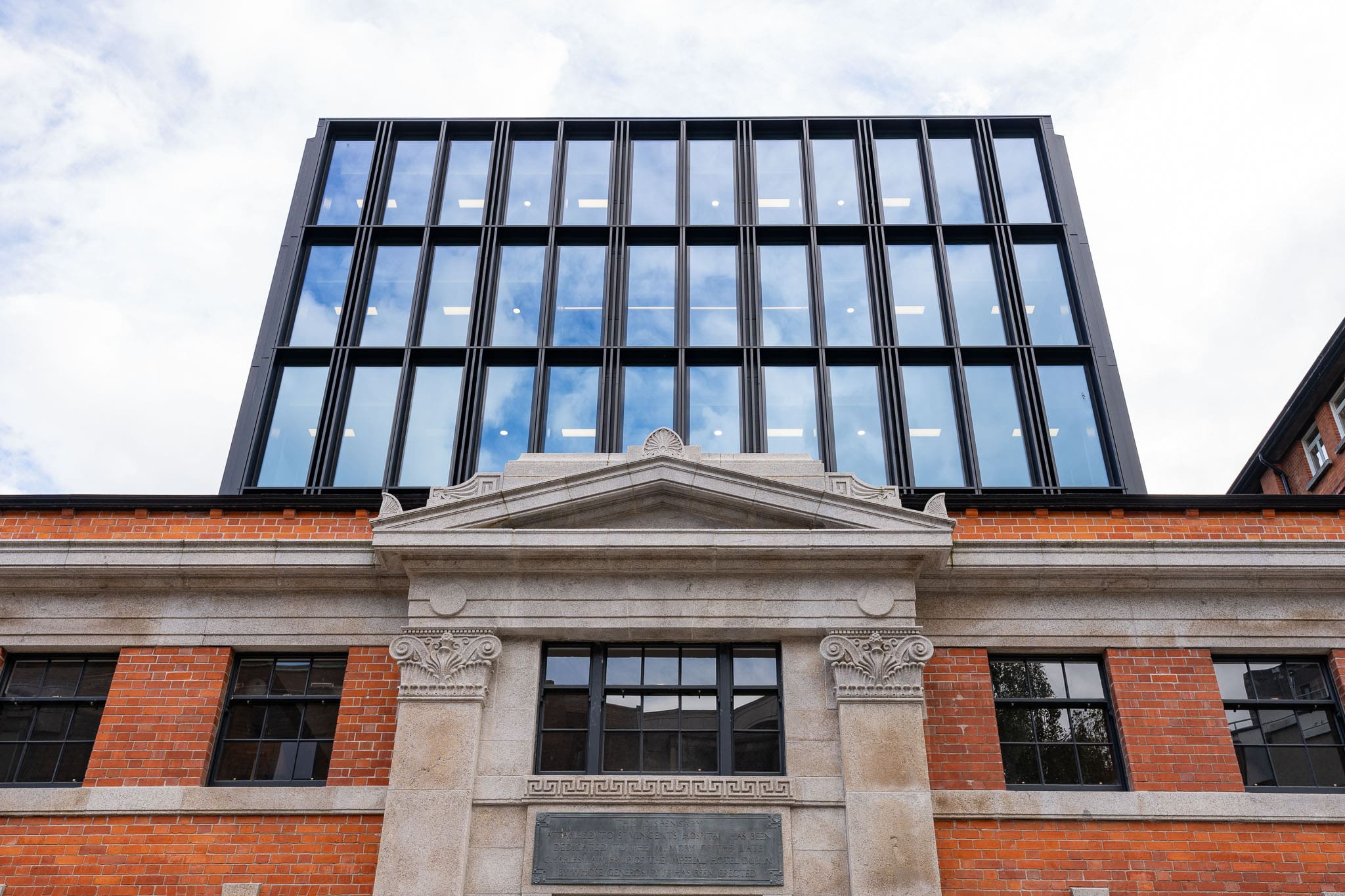
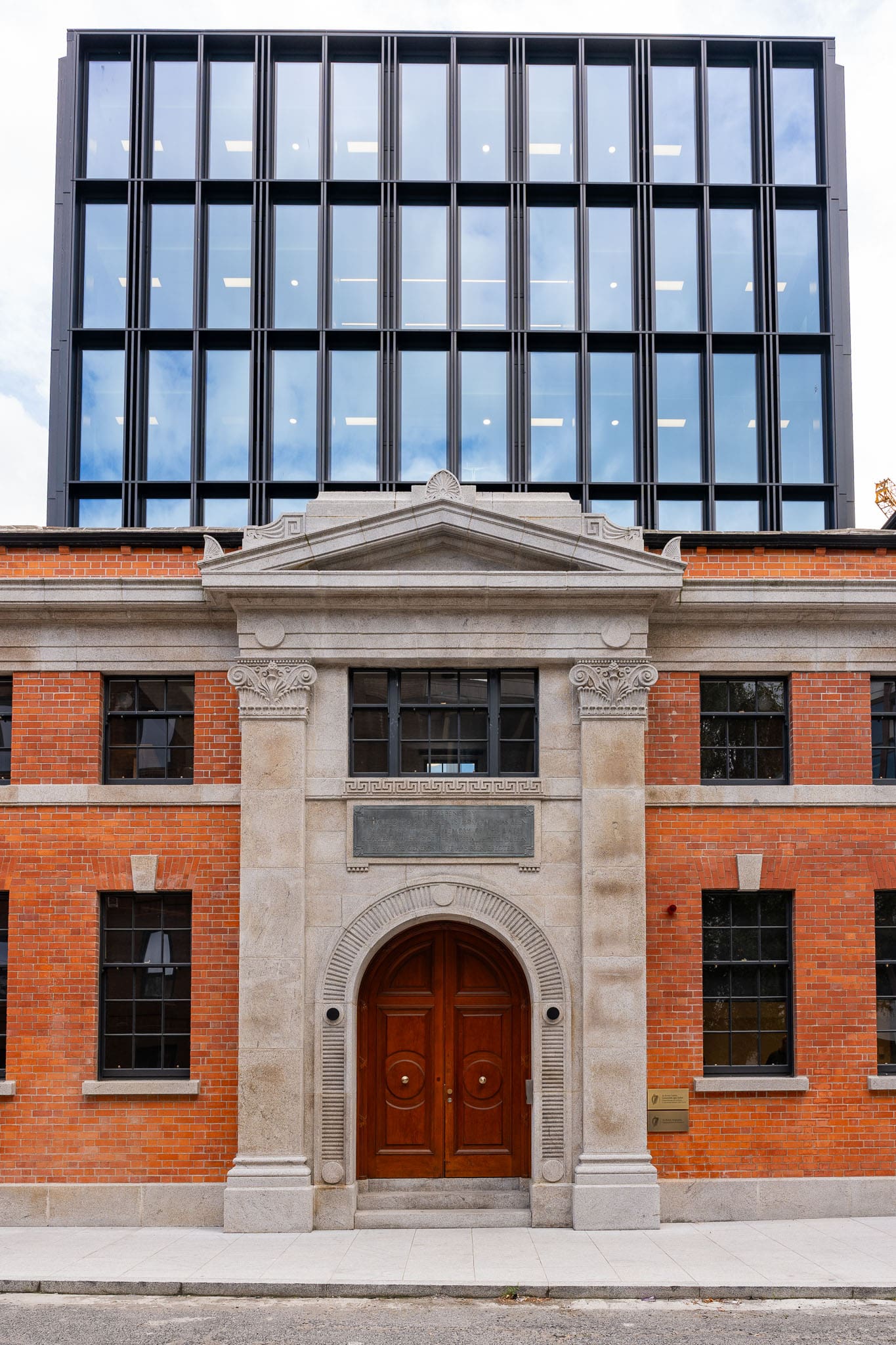
The tight site with full basement footprint allowed for little or no set down areas and limited delivery access requiring articulated trucks to reverse. This influenced the choice of construction methodology to maximise offsite fabrication and manufacture to achieve just in time delivery of the main components of the structure and façade, i.e. mobile pumped concrete, steel frame, precast floor plates, & unitised façade.
The basement was constructed using a secant piled embedded retaining wall to assist with temporary dewatering as well as protecting the surrounding historic buildings and road with services during the bulk excavation. High torque CFA piling was selected to minimise noise and vibration of sensitive neighbouring buildings.
The RC core was jump formed ahead of the steel frame arrival onsite. All connections to the core were meticulously detailed and set out to ensure accurate installation and safe load transfer from the steel frame. Cold weather conditions during the jump forming process required protection from the cold including heating and thorough monitoring and temperature matched testing to ensure high quality insitu concrete develops sufficent strength whilst maintaining critical program progress.
This building is set to achieve NZEB.

Project Director